Jewish wedding in marrakech , morocco :the complete guide
Morocco Wedding Guide
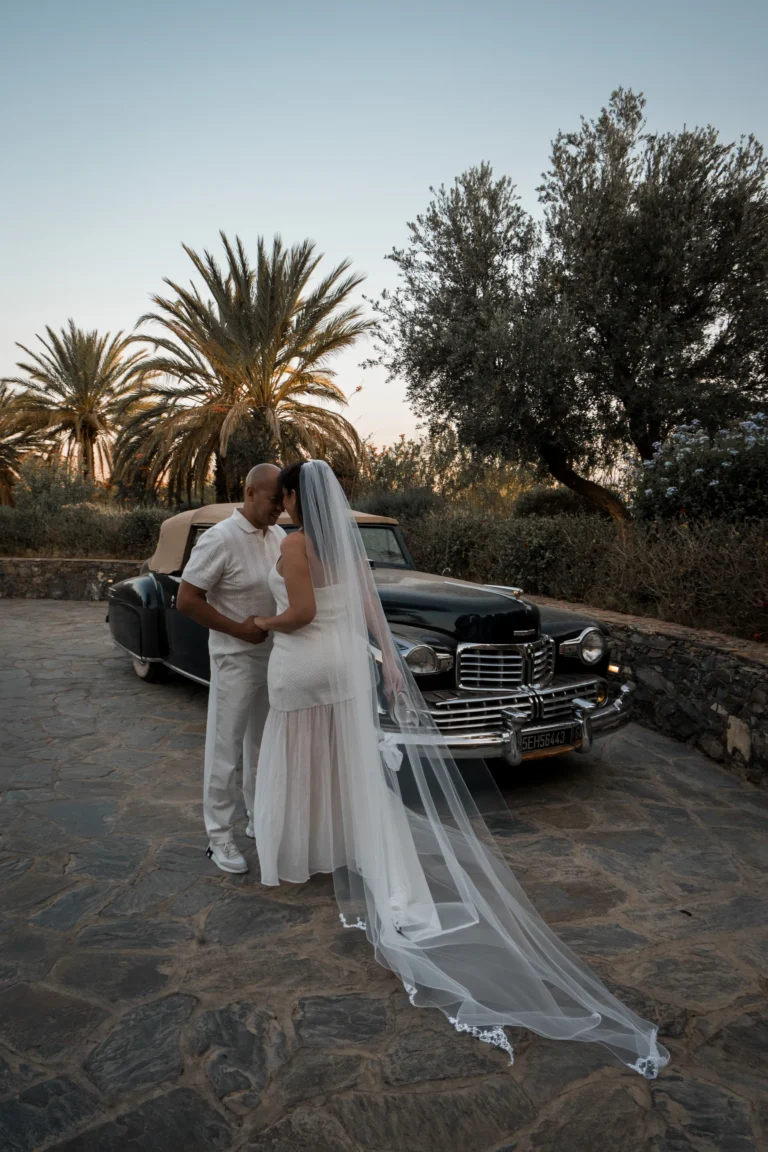
A Jewish wedding in Marrakech is a return as much as a celebration. This is what it takes to do it properly: kosher supervision, the rabbi question, the henna night that deserves more coverage than the wedding day, and the Shabbat rules every photographer here has to build the schedule around.
A Jewish wedding in Marrakech is entirely possible, and for many families it is deeply personal. Morocco was once home to the largest Jewish community in the Muslim world, with estimates ranging from 150,000 to 350,000 people before 1948. Fewer than about 1,500 remain today. For families whose grandparents left Marrakech, Casablanca, Fes or Essaouira, coming back to marry here is not a destination wedding. It is a homecoming.
The practical infrastructure exists. Kosher catering under the supervision of the Beth Din of Casablanca operates in Morocco, several Marrakech venues have hosted chuppah ceremonies, and the city has both a historic mellah and a working synagogue. What is harder to find is a photography and film team that already understands the shape of the week: which events cannot be photographed, which one is visually the richest, and why the schedule is not yours to move.
We are filmmakers, not rabbis. Customs vary between Moroccan, Sephardi and Ashkenazi families, and between communities within Morocco itself. Everything below describes what we see and plan around. Every religious question belongs with your rabbi and your families.
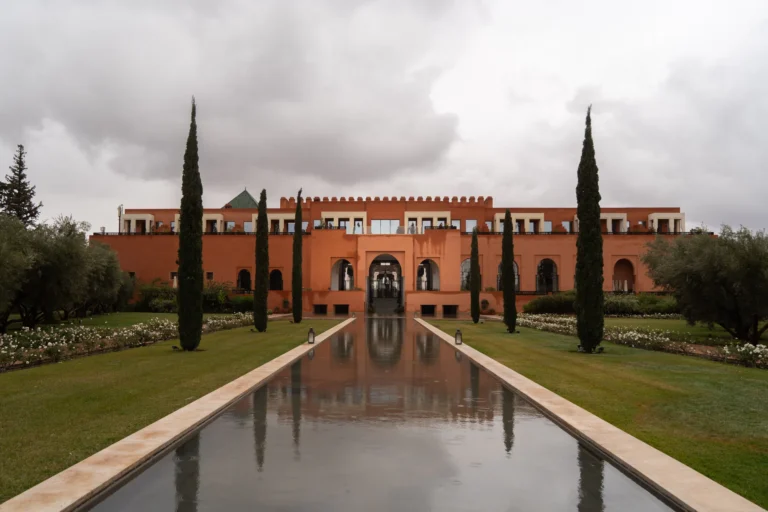
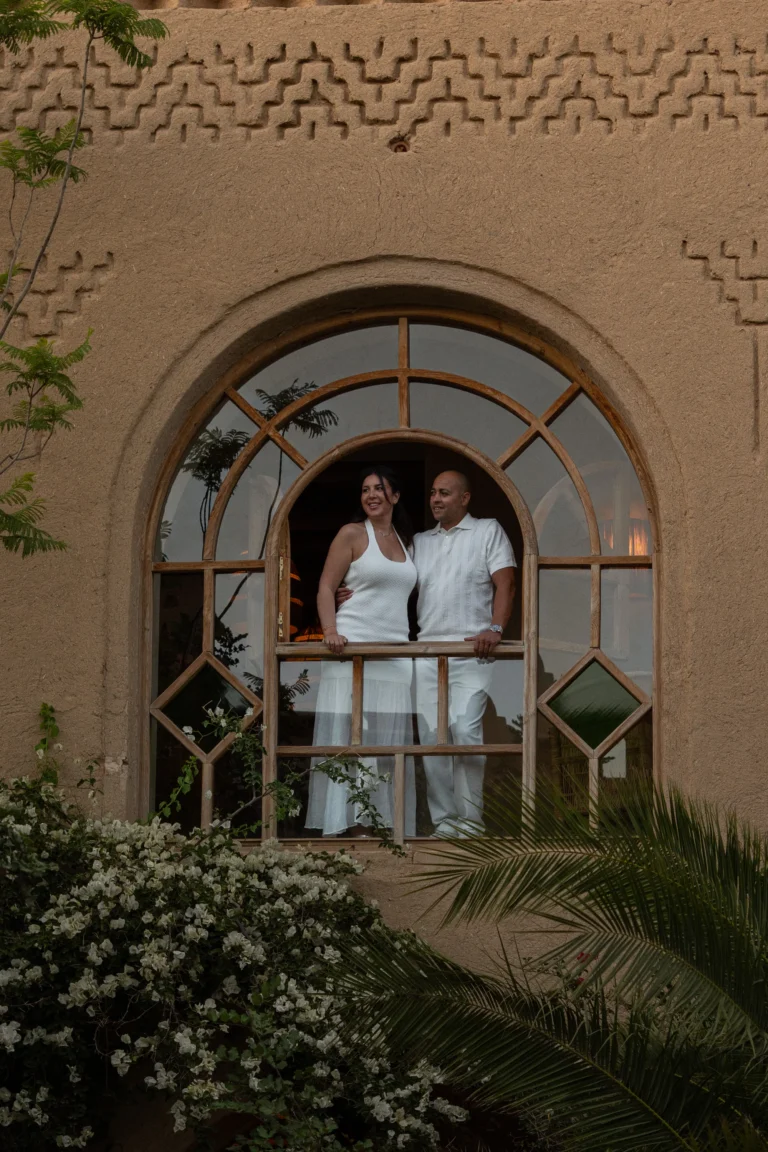
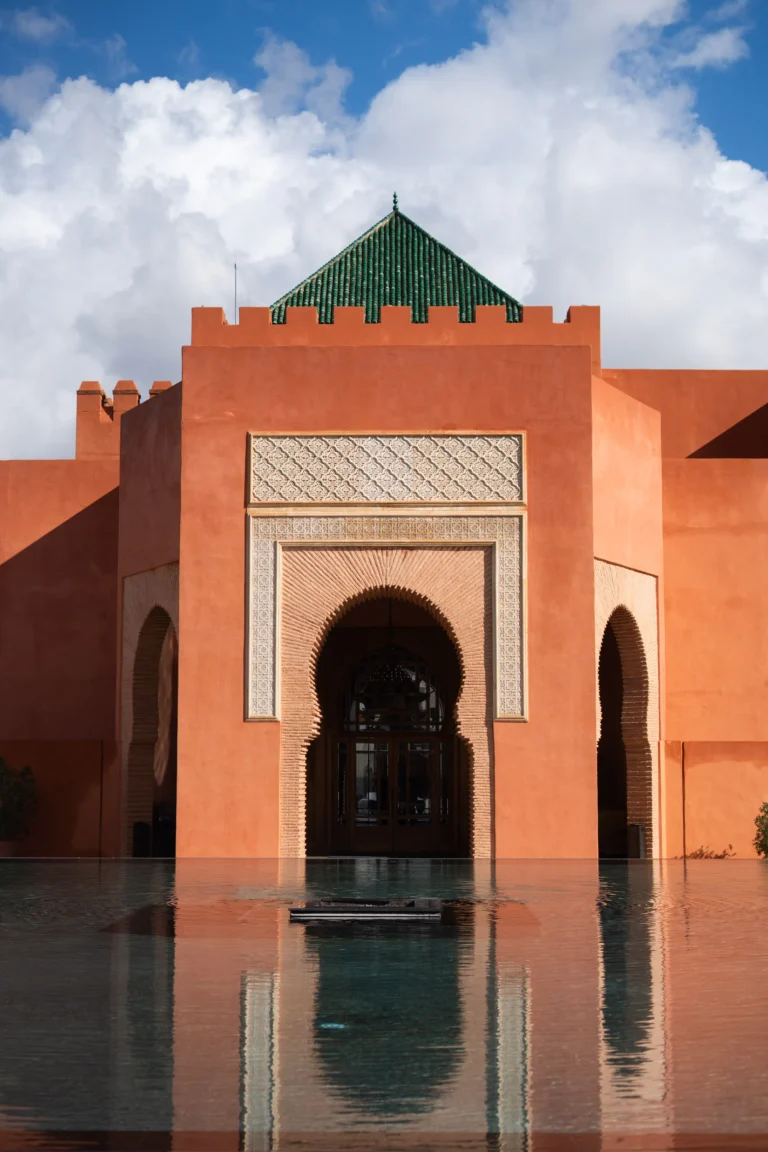
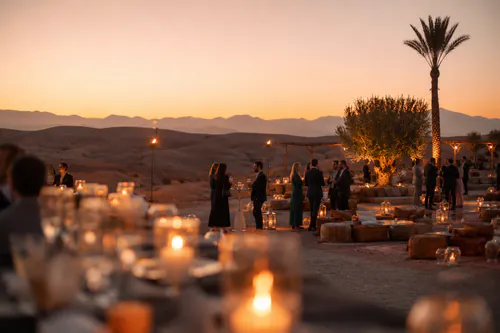
Selected frames / Marrakech · Palmeraie · Agafay
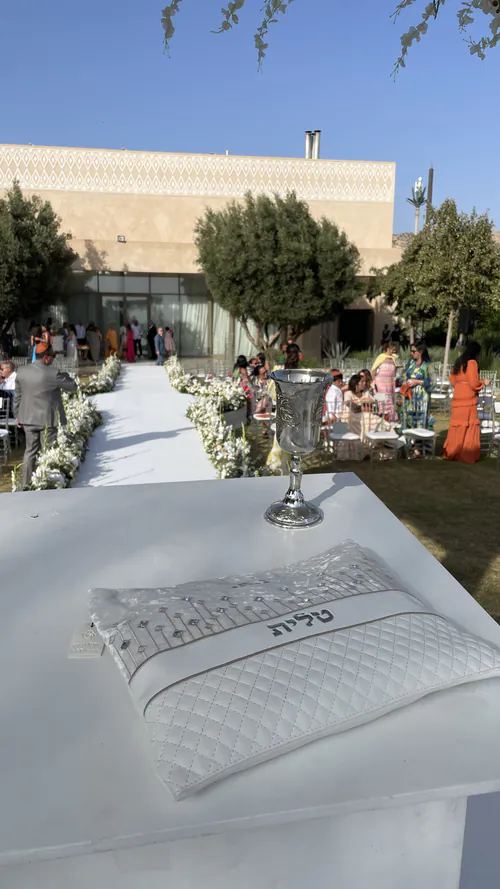
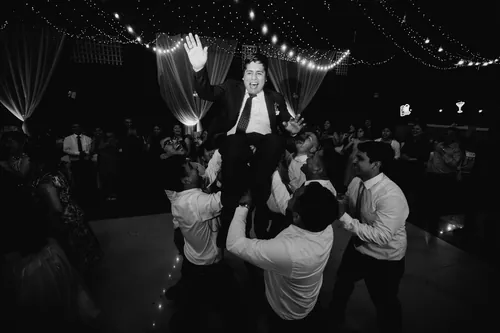
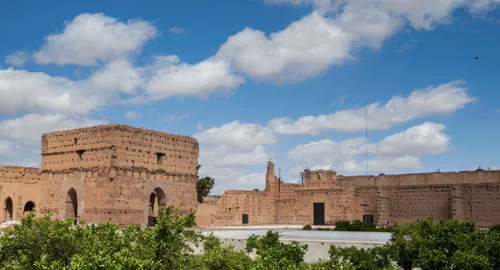
The case for the city
Why hold a Jewish wedding in Marrakech
Three reasons come up again and again in the conversations we have with families.
It is where the family is from
This is the one that matters most. Grandparents who left in the 1950s and 60s, a surname that still appears on a street in the mellah, a grandmother who can name the exact riad. Bringing three generations back for a wedding does something that no other venue on earth can do, and it shows in the photographs of the older guests more than in the photographs of the couple.
The traditions already belong here
Moroccan Jewish wedding customs did not travel to Morocco. They were formed here. The henna night, the gold-embroidered gown, the marzipan sweets, the piyutim: this is their home ground. Holding them in Marrakech is not fusion, it is restoration.
The practical case
Marrakech is two and a half to three and a half hours from most European capitals, visa-free for EU, UK, US, Canadian and Australian passport holders, and materially less expensive than comparable Mediterranean destinations. For a multi-day celebration with a large guest list, that gap compounds fast.
The first question
Kosher catering and rabbinical supervision
This is where every serious conversation starts, and the answer in Morocco is better than most couples expect.
Kosher catering under the supervision of the Beth Din of Casablanca operates across the country. It is well established enough that major hotels in Marrakech, Agadir and Tamuda Bay run full glatt kosher Passover programmes every year, with daily minyanim and rabbinical oversight. Several Marrakech wedding caterers and planners work with kosher Beth Din caterers as a standing option.
Practical points to settle early, in writing:
- Level of supervision. Confirm with your rabbi what standard your family requires, then confirm the caterer meets it. Do not assume the two match.
- Kitchen access. Some venues require in-house catering. If yours does, the kosher caterer needs a workable arrangement with that kitchen, agreed months ahead.
- Wine. Kosher wine has to be brought in. Confirm quantities and timing well before the week of the wedding.
- The ketubah. If your family needs a ketubah issued under an Orthodox authority, establish which authority and who is officiating before anything else is booked.
A note on the rabbi. Some families bring their own, some arrange one locally. Either works, but the decision shapes your entire schedule, because whoever officiates will have views on timing, on the kashrut of the reception, and sometimes on photography. Settle it first.
Where
Venues that work for a chuppah in Marrakech
| Venue type | Why it works |
|---|---|
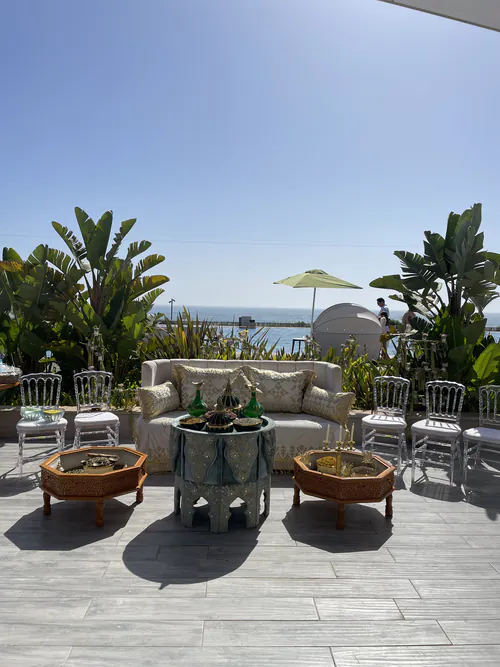
| Palmeraie villas and garden estates | Space for a freestanding chuppah, room for an outside kosher kitchen, privacy for a multi-day programme, and on-site accommodation for guests who will not travel on Shabbat. |
| Palace hotels | Experience with kosher programmes, capacity for large guest lists, and everyone under one roof, which matters more here than at most weddings. |
| Medina riads | Extraordinary for the henna night and for portraits. Usually too small for the full celebration, and kitchen access can be difficult. |
| Agafay desert camps | A chuppah against open desert at sunset is unforgettable. Logistics for kosher catering and Shabbat accommodation need serious planning. |
The recurring theme is accommodation. If observant guests are with you for Shabbat, they need to be within walking distance of where they will eat and pray. That single constraint eliminates more venues than budget does. Our guide to Marrakech wedding venues covers how each property behaves across a full weekend.
The calendar
Shabbat and the wedding calendar
Two things shape the week, and neither is negotiable.
The date itself
Weddings do not take place on Shabbat or on festivals, and several periods in the Jewish year are traditionally avoided for weddings. Your rabbi will tell you which dates are available to you. Work from that list backwards, not from venue availability forwards. Sunday through Thursday celebrations are common, and Saturday night after Havdalah is a beautiful option that gives you the whole of Shabbat with your guests beforehand.
What happens on Shabbat
From sunset on Friday until nightfall on Saturday, we do not photograph or film. Cameras are put away. This is not a limitation to work around, it is simply part of the week, and any team that treats it as an inconvenience is the wrong team.
What we do instead is make sure the hours on either side are covered properly: guests arriving, the table being set, candles before sunset, and then the whole thing again on Saturday night as the celebration restarts.
A photographer who has to be told about Shabbat on the wedding week is a photographer who will be standing in the wrong place all weekend.
The richest night
The henna night, or Noche de Berberisca
If we could give one piece of advice to a family planning a Jewish wedding in Marrakech, it would be this: give the henna night the same coverage as the wedding day. Visually, it is often the stronger of the two.
The Moroccan Jewish henna celebration goes by several names depending on where the family is from: Noche de Berberisca, Noche de Novia, lilat el henna. It takes place in the days before the wedding and brings both families together.
The gown
At the centre of it is the keswa el kbira, the grand dress, known in Haketía as the traje de berberisca. Traditionally a father gives it to his daughter, and she wears it for the first time on the henna night. Its symbolism is dense: the twenty-two braided gold galloons on the skirt stand for the twenty-two letters of the Hebrew alphabet, and the embroidery carries the tree of life among other motifs. Its form traces back to fifteenth-century Spain and travelled with the exiles who settled across Morocco. The groom traditionally wears a jellabiya.
Many families now borrow, rent or inherit the gown, since the finest examples are antique. Some are more than a century old.
What happens
The couple are treated as king and queen for the night. Henna is applied, often to the bride’s right hand and then to guests, as a blessing for luck, protection and a sweet life. There are piyutim, trays of marzipan sweets prepared well in advance, dates, mint tea, gold jewellery given by the families, and guests in traditional dress. It is loud, warm and entirely unlike the wedding day in mood.
Gold thread on deep velvet, under lantern light, with people moving. It is the hardest thing we photograph all week and the thing families treasure most.
For your guests
Jewish Marrakech, worth an afternoon
Most families build a heritage afternoon into the week, and for guests who have never been to Morocco it becomes one of the things they remember.
- The mellah. The historic Jewish quarter, beside the Bahia Palace, with its own rhythm and its own architecture.
- Slat al-Azama synagogue. A working synagogue with a courtyard and a small heritage display.
- The Miaara cemetery. Extensive, whitewashed, and for many families the reason the whole trip happens. If your family has graves here, allow real time rather than an hour.
We photograph these afternoons quietly and at a distance. They are not a photo session, and treating them as one would be a mistake.
Our approach
How we cover a Jewish wedding in Marrakech
H264Films is a Marrakech-based photography, film and drone team. Photo, film and aerial come from one crew rather than three companies, which matters more on a multi-day celebration than on a single day, because the henna night, Shabbat and the wedding end up looking like one story rather than three.
We build the schedule around your calendar, not ours
You tell us when Shabbat begins and ends, and we plan the week from there. Cameras away before sunset on Friday, back out after Havdalah. No negotiation, no discussion on the day.
We ask before we assume
Whether there is a bedeken, whether the bride circles the groom, whether the couple go to yichud or straight to the guests, whether dancing is mixed or separate, whether there are guests who prefer not to be photographed. Moroccan, Sephardi and Ashkenazi practice differ, and families differ within each. We ask in advance rather than improvising in the room.
We know what the ceremony demands technically
A chuppah is a fixed frame with a rabbi, witnesses and parents inside it, and often very little room to move. Gold embroidery on dark velvet is a metering problem that punishes guesswork. The hora is chaos in the best sense and needs a second shooter who knows where to stand. None of this is improvised well.
We work with your rabbi and your planner
If your officiant has rules about photography during the ceremony, we want them beforehand, not as a whispered correction under the chuppah.
The shape of it
A typical week
Every family builds this differently. This is the pattern we see most often.
- WednesdayGuests arrive. Welcome dinner, usually relaxed and in the medina or at the main venue.
- ThursdayHeritage afternoon in the mellah and at the cemetery. In the evening, the henna night. Full coverage.
- FridayPreparations, then Shabbat begins at sunset. Coverage ends before candle lighting.
- SaturdayShabbat. No cameras. Coverage resumes after nightfall if the celebration continues.
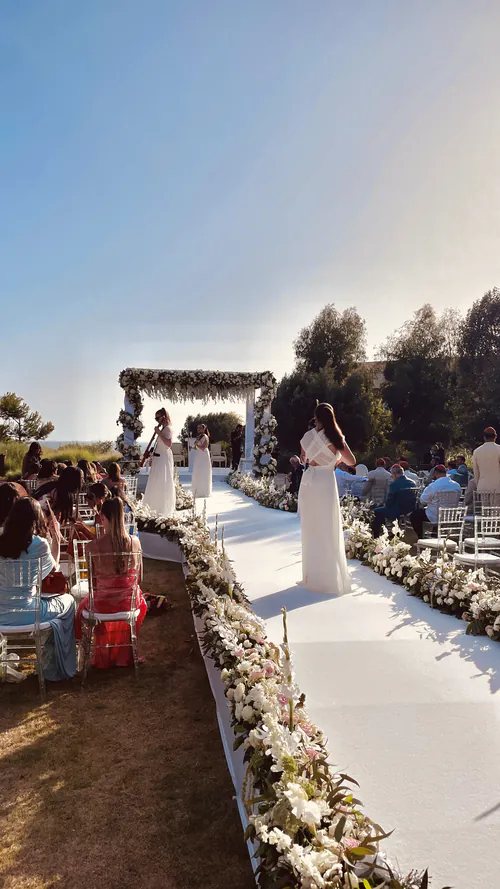
- SundayThe wedding. Ketubah, chuppah, sunset portraits, dinner, hora, the rest of the night.
- MondayBrunch, or a desert excursion for guests who are staying on.
Learn from others
Five things families wish they had settled earlier
- Booking the venue before confirming the date with the rabbi. Available dates come from the Jewish calendar first, from venue availability second.
- Assuming any kosher caterer meets your family’s standard. Confirm the level of supervision with your rabbi, in writing, before deposits.
- Under-covering the henna night. It is frequently the most beautiful event of the week and it is the one most often booked as an afterthought.
- Housing observant guests away from the venue. If they cannot walk to you on Shabbat, the weekend breaks in half.
- Hiring a photographer who has never worked a Shabbat schedule. It is not about skill. It is about knowing, without being told, when to put the camera down.
Common questions
Jewish wedding in Marrakech: FAQ
Can you have a kosher wedding in Marrakech?
Yes. Kosher catering under the supervision of the Beth Din of Casablanca operates in Morocco, and several Marrakech caterers and planners work with kosher Beth Din caterers. Confirm the specific level of supervision with your rabbi before booking.
Is there a synagogue in Marrakech?
Yes. Slat al-Azama, in the historic mellah, is a working synagogue with a courtyard and a small heritage display. Marrakech’s resident Jewish community today is very small and mostly elderly.
Do you photograph on Shabbat?
No. From sunset on Friday until nightfall on Saturday we put the cameras away. We plan the coverage around the hours either side so nothing important is lost.
What is a Noche de Berberisca?
The Moroccan Jewish henna celebration held in the days before the wedding, also called Noche de Novia or lilat el henna. The bride wears the keswa el kbira, the gold-embroidered grand dress traditionally given by her father, and the couple are treated as king and queen for the night.
Can we bring our own rabbi to Morocco?
Many families do. Others arrange an officiant locally. Either works, but settle it early, because your officiant’s requirements will shape the catering, the timing and sometimes the photography.
Is the legal marriage done in Morocco?
Most international couples complete the civil marriage at home and hold the religious celebration in Morocco, which avoids a demanding administrative process. See our guide to getting married in Morocco as a foreigner.
Can guests visit Jewish heritage sites while they are here?
Yes, and most families build in an afternoon for it. The mellah, Slat al-Azama synagogue and the Miaara cemetery are all within the old city, and Casablanca, Fes and Essaouira each have significant Jewish heritage if you are travelling further.
Availability
Planning a Jewish wedding in Marrakech?
Send us your dates, your venue shortlist and the shape of your week. We are based here, we work photo, film and aerial as one team, and we will plan the coverage around your calendar from the first conversation rather than the last one.
Check our availabilityWritten by Rachid, H264Films. Wedding photography, film and aerial work across Morocco. Further reading on Jewish weddings in Morocco: Jewish Journal. See our recent work.