Getting Married in Morocco as a Foreigner: 2026 Legal Guide
Morocco Wedding Guide
Getting married in Morocco as a foreigner comes down to two routes, and the one you choose quietly shapes your entire wedding day. Here is what actually happens on each, from the people who photograph both.
Getting married in Morocco as a foreigner is possible, but rarely simple. For most international couples the smarter route is to sign the legal paperwork at home and hold the real celebration here. Morocco’s legal marriage process is genuinely demanding: court authorisation, sworn Arabic translations, medical exams that can only be done on Moroccan soil, and a file that takes months to assemble. The good news is that the route you choose barely affects how your day looks or feels. It changes what happens before you arrive.
We are a wedding photography and film team based in Marrakech. We have shot both kinds of day: the fully legal Moroccan ceremony with the adouls, and the symbolic riad ceremony where the paperwork was already signed in Manchester or Lyon three weeks earlier. This is what we have learned watching couples go through it.
We are filmmakers, not lawyers. Requirements change, and they change depending on your nationality, your religion and your marital history. Everything below is a starting point to help you ask better questions.
Confirm every detail with your embassy or consulate in Morocco, and with a Moroccan family-law professional, before you book anything.
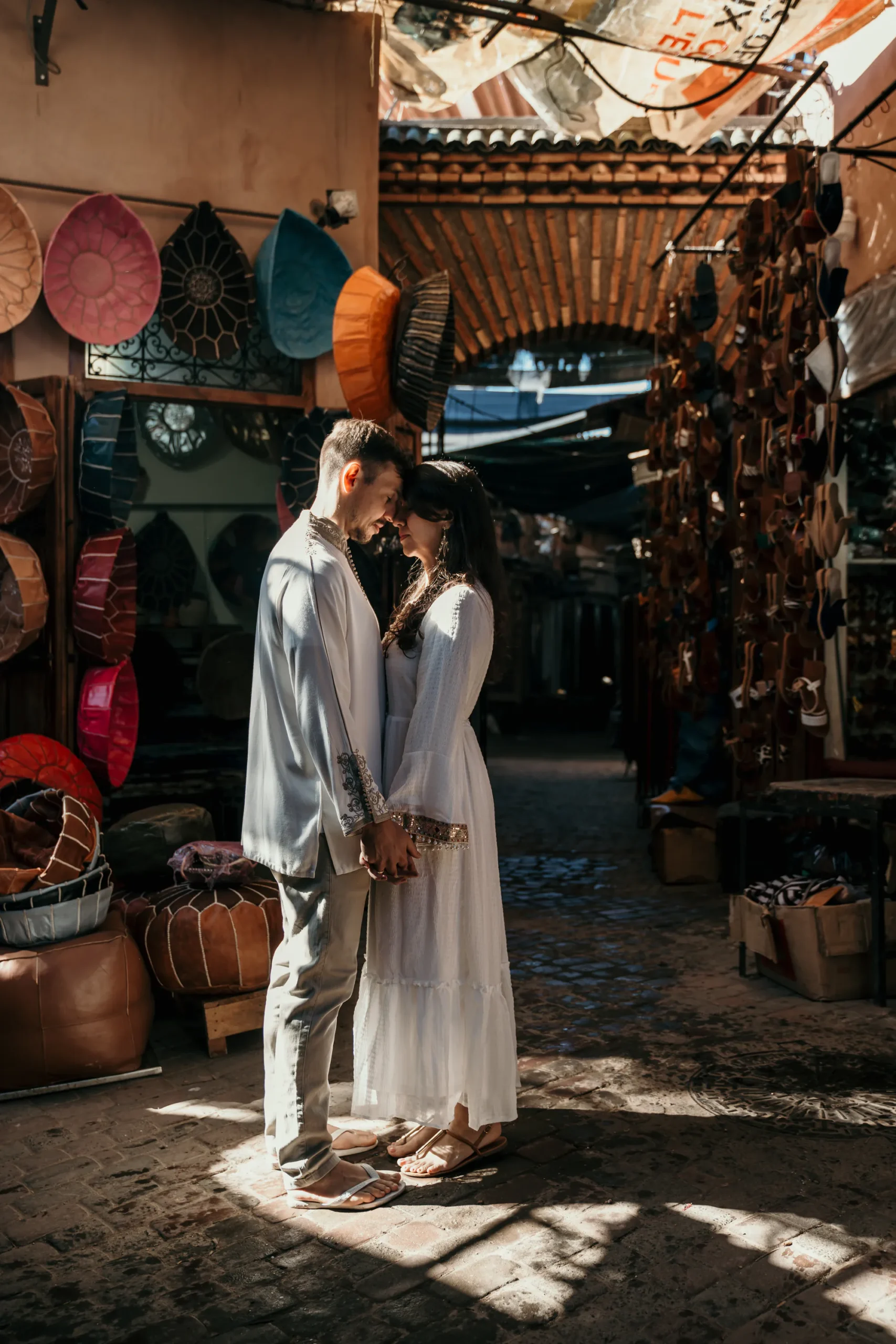
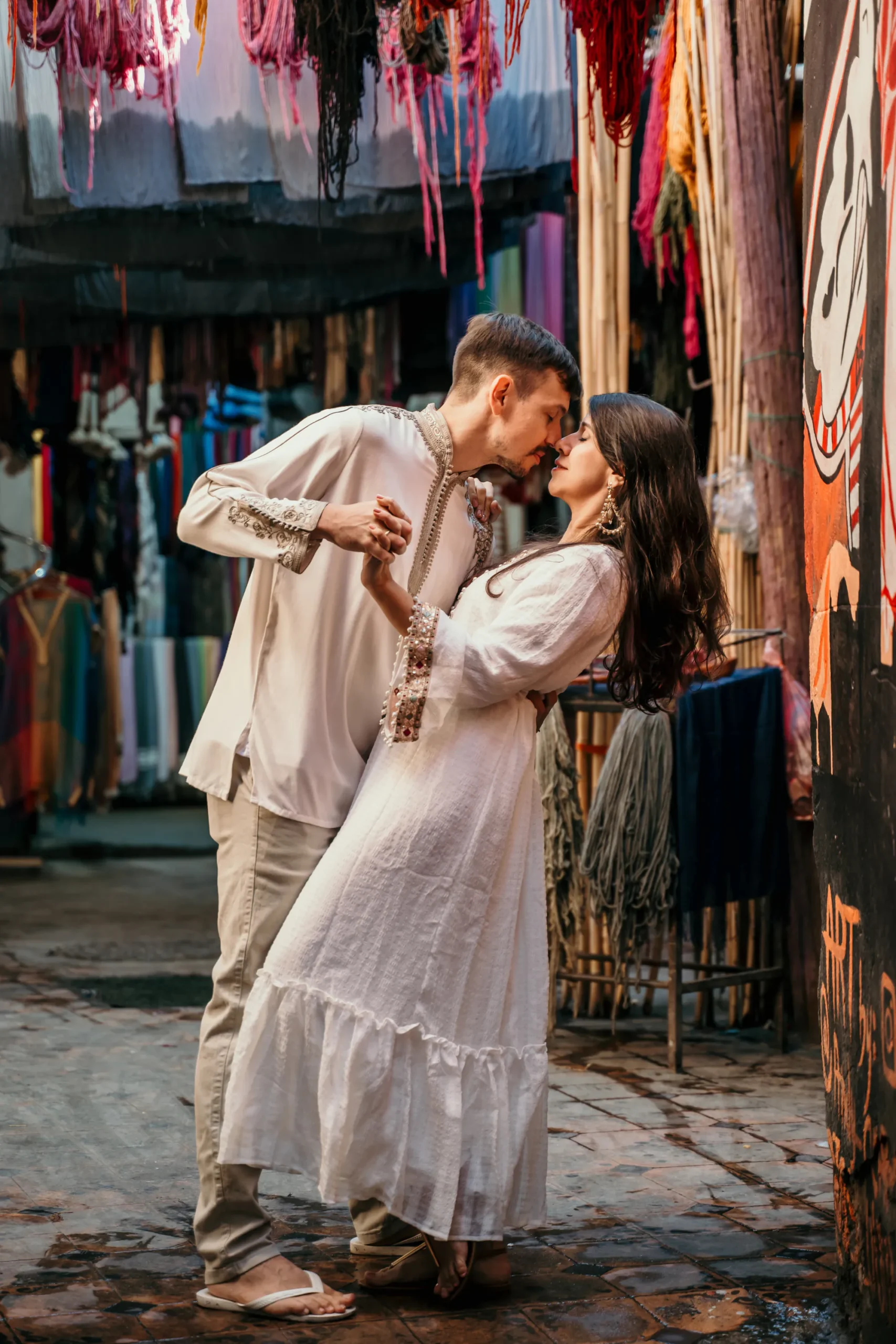
Selected frames / Marrakech · Agafay · Essaouira
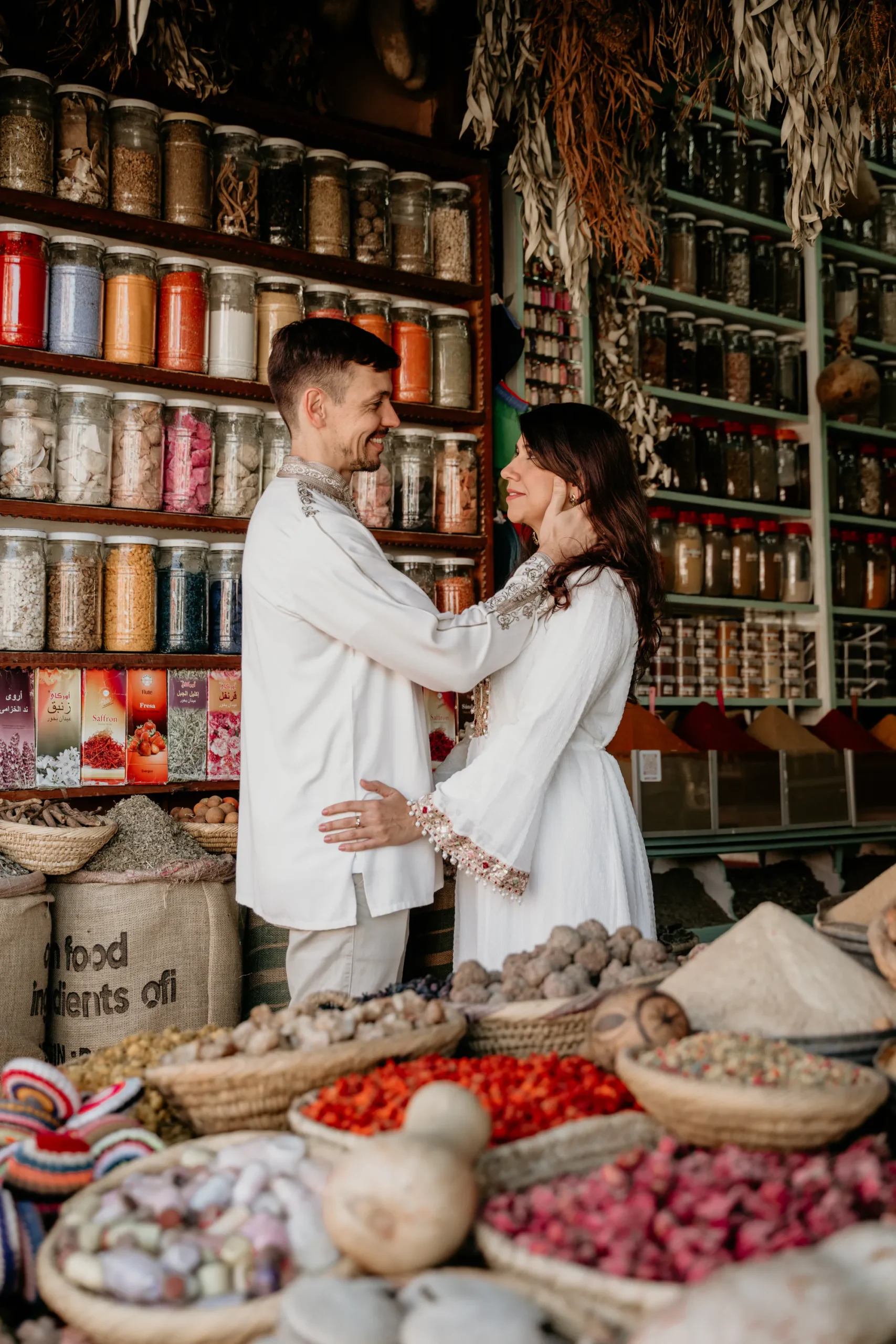
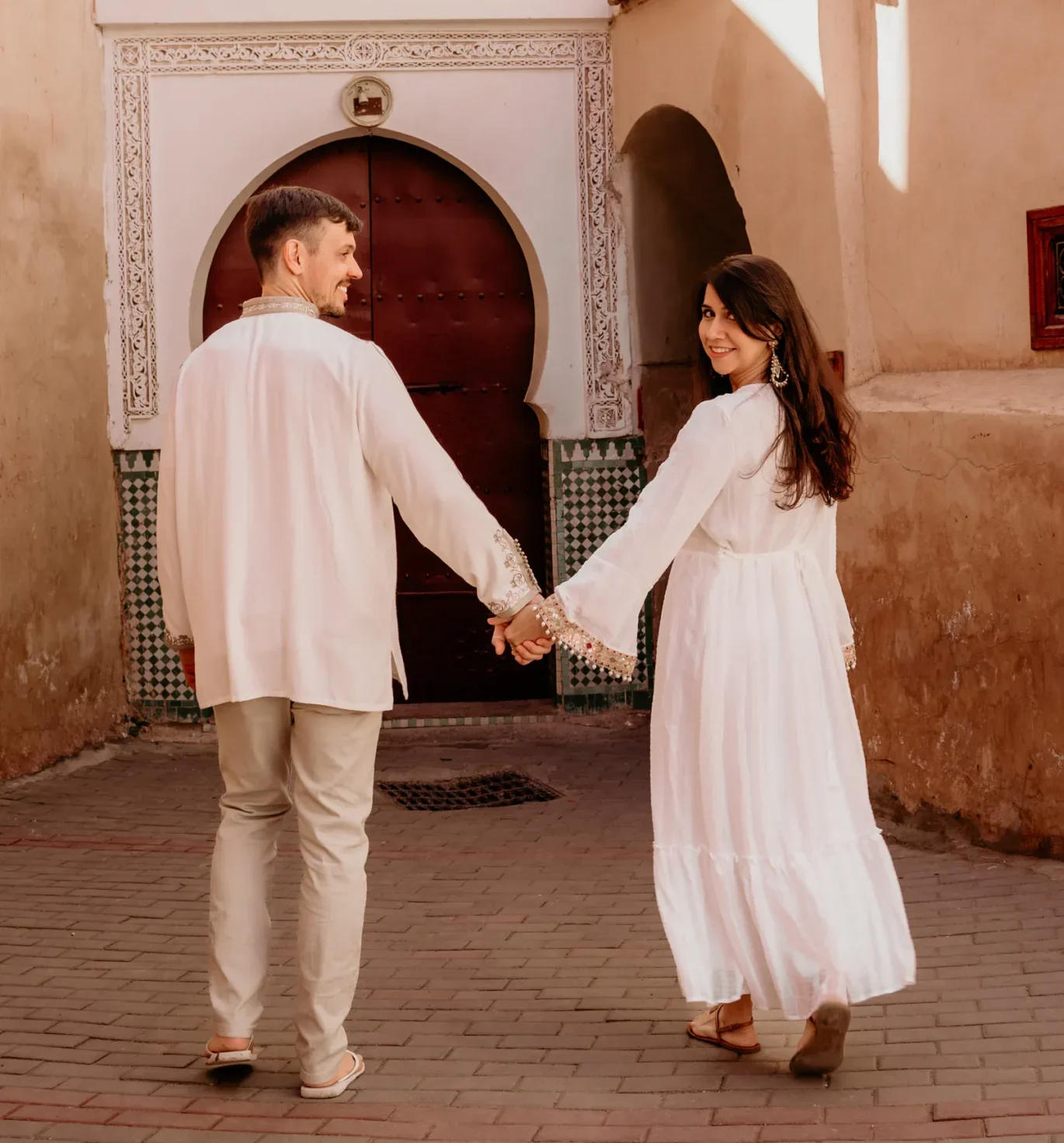
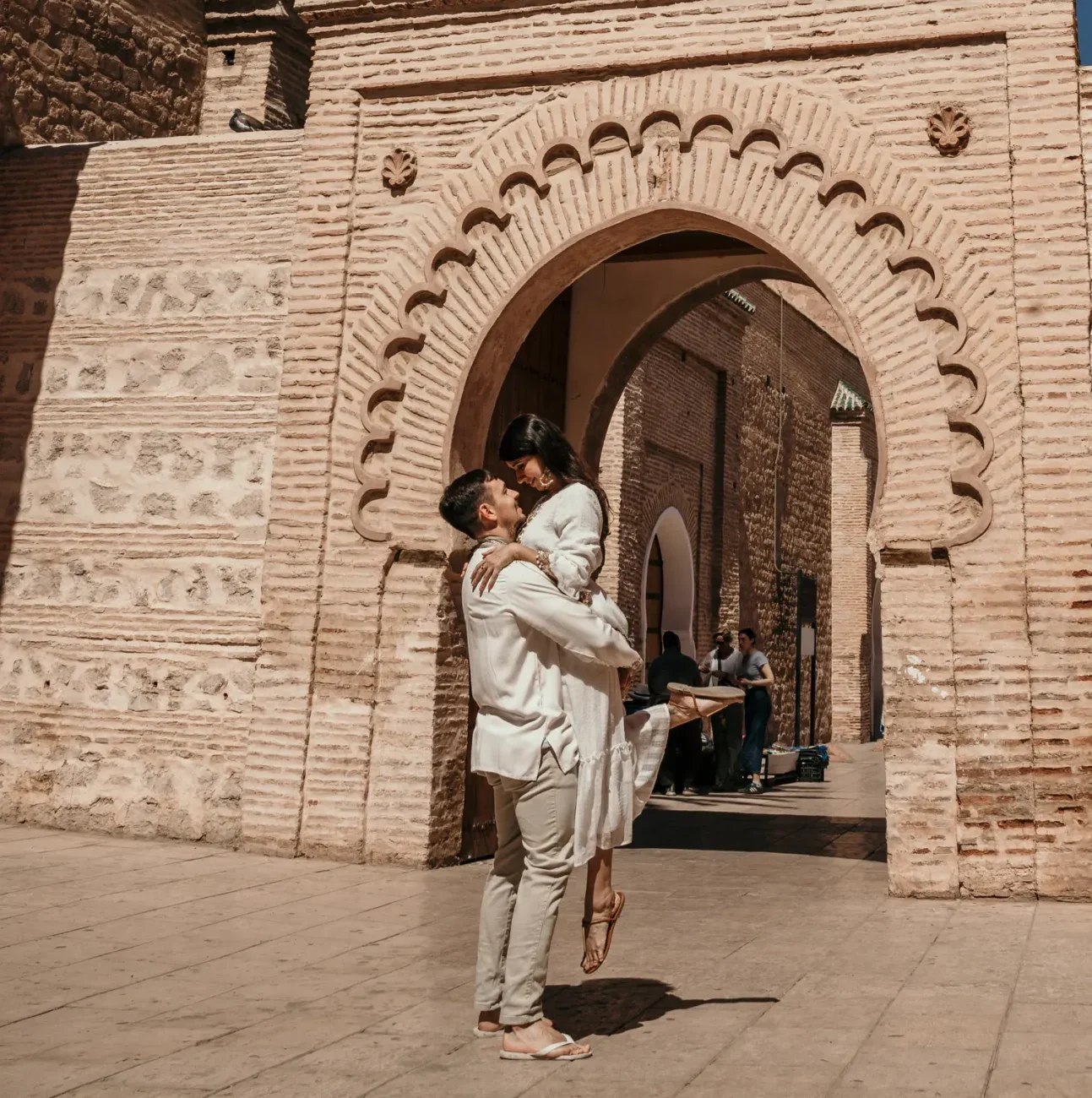
The legal position
Can foreigners legally get married in Morocco?
Yes, but that yes arrives with conditions most couples do not expect.
Marriage here is governed by the Family Code, known as the Moudawana. It is not a civil registry system like a town hall in France or a courthouse in the United States. The marriage contract is drawn up by two adouls, the traditional notaries, and for foreign nationals only after a family judge has issued an authorisation.
There is no fast track, no walk-in ceremony, and no sorting it out once you land. Three things decide how difficult your case will be.
- Whether one of you is Moroccan. Mixed couples have a defined, well-trodden path. Two foreigners marrying each other do not.
- Your religion. This matters far more than couples anticipate, and it is covered in full below.
- Your nationality. Which documents your embassy issues, and how quickly, varies enormously.
Your options
Getting married in Morocco as a foreigner: your three routes
| Legal in Morocco | Legal at home, symbolic here | Mixed couple | |
|---|---|---|---|
| Who it suits | Couples who specifically want a Moroccan marriage certificate | Most international couples | One partner is Moroccan |
| Preparation | 3 to 6 months minimum | Weeks | 3 to 6 months |
| Paperwork | Heavy | Almost none in Morocco | Heavy, plus a court interview |
| Ceremony freedom | Limited, fixed legal format | Total: your vows, officiant, language | Structured |
| Legally binding | Yes | Yes, via your home country | Yes |
Route one
A full legal marriage in Morocco
You assemble a complete marriage file, submit it to the family court, and the adouls draw up and register your contract. You leave with a Moroccan marriage certificate. It is the most demanding path and the one couples underestimate most often.
Route two
Legal at home, symbolic in Morocco
You sign at a registry office at home, often a fifteen-minute appointment with two witnesses. Then you fly out and have the wedding you actually pictured. Your own words. A friend officiating. English, French, Spanish, whatever you want. Sunset in the Agafay instead of a ten o’clock slot at a tribunal.
Wedding planners in Marrakech report that the large majority of foreign destination weddings here are symbolic, and it is easy to see why. This route removes the courts, the translations and the delays entirely, and hands you complete control over the structure, language and tone of your ceremony.
One thing to be absolutely clear about: a symbolic ceremony carries no legal standing, in Morocco or anywhere else. You will not receive a marriage certificate from it. For couples already married at home that is irrelevant. For couples who are not, it is a serious misunderstanding, and we have seen it happen.
Route three
Mixed couples, where one partner is Moroccan
This is the most common legal marriage involving a foreigner, and the one Moroccan authorities handle routinely. Expect the full document file, a court authorisation, and in many cases an interview with both of you present.
The file
The documents you will need to marry in Morocco
If you are pursuing the legal route, this is roughly what the file involves. None of it is optional. A missing document does not slow the process down, it stops it.
From your side
- Valid passport, plus a certified copy of the photo page showing your Morocco entry stamp
- Certificate of capacity to marry, also called a certificate of no impediment or an affidavit of eligibility, issued by your embassy or consulate in Morocco
- Affidavit of nationality
- Recently issued birth certificate
- Criminal record extract from your home country
- A medical certificate obtained in Morocco. This one cannot be done in advance at home
- Divorce decree or death certificate if either of you has been married before
- Four passport photographs, 3 x 4 cm
Then, for every single document
- Apostille, if your country is party to the Hague Convention
- Certified Arabic translation. Here is the trap that catches almost everyone: the translator must be officially recognised by the Moroccan courts. Your usual agency at home will not be accepted
- Legalisation, typically via the Ministry of Foreign Affairs
Article 65 of the Family Code sets out the required file, including a medical certificate and an administrative attestation for each partner. Foreign nationals additionally need the marriage authorisation issued by the family judge.
Check your own embassy’s page as well, because the lists genuinely differ. The US Embassy in Morocco publishes its own version that includes proof of income and a written statement of intent to marry.
Straight answers
Religion rules when marrying in Morocco
This trips up more couples than anything else, and the vague answers you will find online help nobody.
Under the Moudawana, a marriage between a Muslim woman and a non-Muslim man is not permitted, while a Muslim man may marry a woman of the People of the Book. In practice, if the bride is Moroccan and Muslim and the groom is not, he will need to convert to Islam and provide proof of conversion.
If both of you are foreign and non-Muslim, Moroccan law does not provide a civil route for you to marry each other here. Some couples marry at their own embassy where their nationality allows it. Most hold a symbolic ceremony instead.
Two further points, because you would rather know now than later. Morocco does not recognise same-sex marriage, and some venues apply their own rules regarding unmarried couples. A good local planner will tell you exactly where you stand at the property you have chosen.
Planning
How long getting married in Morocco as a foreigner really takes
For a legal marriage, work backwards from your date.
- 6 months outStart gathering originals: birth certificates, criminal records, proof of how any previous marriage ended.
- 4 months outApostilles submitted, certified translations arranged with a court-approved translator.
- 3 months outBegin assembling the marriage file with your embassy and the local authorities.
- 2 months outMedical examinations. Both partners, in person, at an approved clinic in Morocco.
- 1 month outCompleted file submitted to the family court.
- The dayThe adouls draw up and register your marriage contract.
Once your file reaches the court, expect roughly two to three weeks before the certificate is issued. Build in buffer. Everyone who has been through this will tell you the same thing.
For a symbolic ceremony, the only timeline that matters is your venue’s booking window.
From behind the camera
What each route changes for your photographs and film
This is the part nobody writes about, and it is the part couples ask us about constantly.
Route two does not just simplify your admin. It gives you a better day to photograph, noticeably, not marginally.
You control the hour
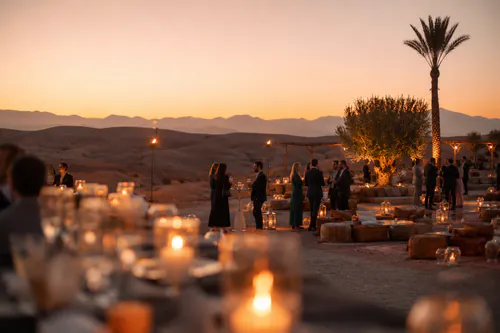
A legal ceremony happens when the adouls and the court are available. That is administrative time: mid-morning, hard overhead light, no negotiation. A symbolic ceremony happens when you choose, which means twenty to seven in an olive grove with the Atlas going pink behind you. Half of what makes a Moroccan wedding photograph the way it does is simply the hour it happens.
You control the shape of it
Legal formats are fixed and brief. Symbolic ceremonies breathe. Letters read aloud, a ritual that means something to both families, a pause where nobody is rushing you. Those pauses are where the frames come from, the ones you will still be looking at in twenty years.
Nobody is anxious
This is the one couples underestimate most. A couple who spent that morning at a tribunal carries it into the afternoon. It sits in their shoulders and in their faces, and a camera reads it immediately.
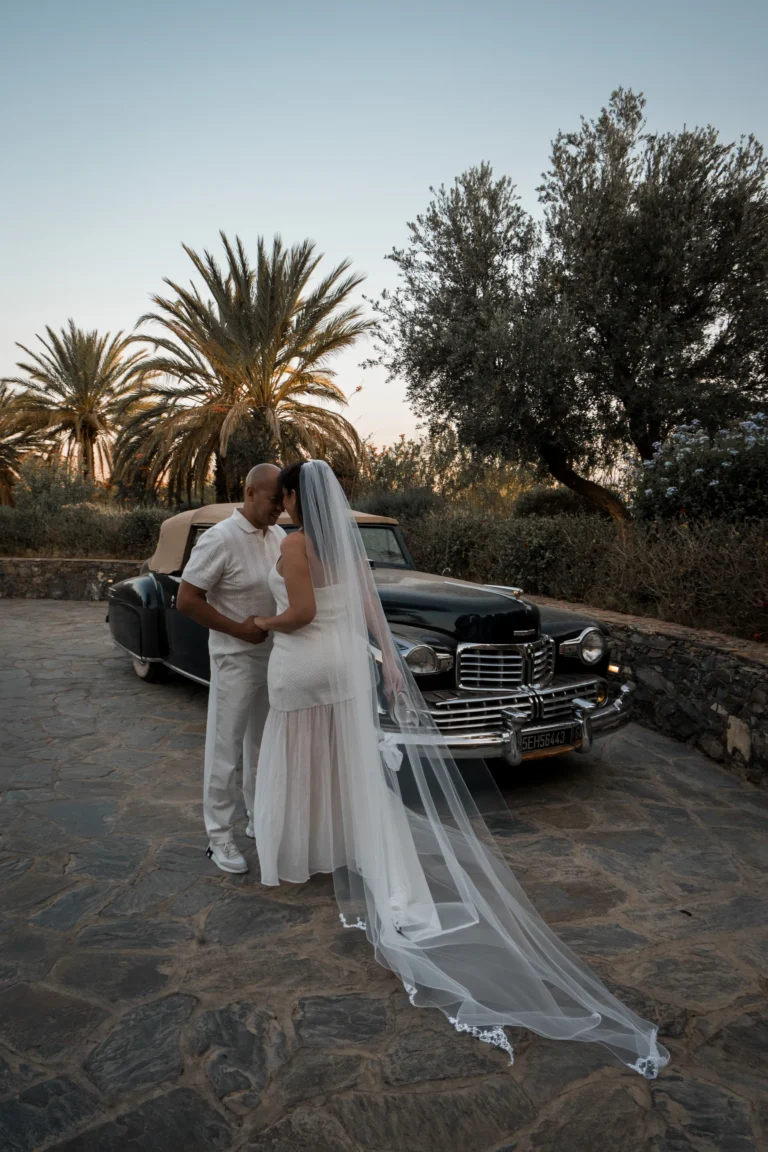
A couple who signed at home three weeks ago arrives with nothing left to worry about. They are simply present. Every image is better for it.
If you do go the legal route, tell us early
The adoul signing is a real document being made. Shot properly, with the hands, the pen, the two witnesses and your parents watching from the side, it becomes one of the strongest sequences in the whole film. But those rooms are small, often poorly lit, and sometimes restrict what we can do. We need to plan for it rather than discover it.
Learn from others
Five mistakes foreign couples make in Morocco
- Assuming a symbolic ceremony is legally binding. It is not. Sort the legal side at home.
- Using a translator who is not court-approved. The file is rejected, the translation is redone, and weeks disappear.
- Starting three months out. For the legal route this is too late. Six months is the realistic minimum.
- Locking a ceremony time before checking the light. In summer, four in the afternoon in Marrakech is punishing for you, your guests and your photographs. Ask us before you confirm it.
- Bringing a drone. Unrelated to marriage law, but it costs couples their equipment every single year. Here is the full explanation.
Next decision
Where couples celebrate once the paperwork is done
Once the legal question is settled, the good part starts. Riad courtyards in the medina, palm groves on the edge of the city, desert camps in the Agafay, the coast at Essaouira, kasbahs in the Atlas foothills. We have worked in all of them and know how each behaves in different seasons and at different hours.
Start here: Best Wedding Venues in Marrakech, a photographer and filmmaker’s insider guide. You can also see recent work in our wedding portfolio.
Common questions
Getting married in Morocco as a foreigner: FAQ
Can two foreigners legally marry each other in Morocco?
It is very difficult in practice. Moroccan law does not provide a civil marriage route for two non-Muslim foreigners, and the courts rarely process such cases. Some nationalities can marry at their own embassy. Most couples marry at home and celebrate here.
Do I need to convert to Islam to marry in Morocco?
Only in specific circumstances, principally where a non-Muslim man is marrying a Muslim woman. A symbolic ceremony carries no religious requirement at all.
How long does the legal marriage process take?
Plan on six months from your first document to the wedding day. Once the complete file reaches the family court, expect roughly two to three weeks.
Is a Moroccan marriage recognised in my country?
A legal Moroccan marriage is generally recognised abroad once properly registered and, where required, transcribed with your own consulate. A symbolic ceremony is not recognised anywhere.
Do we need a wedding planner?
For a legal marriage, effectively yes. The file, the translations and the court steps are hard to navigate remotely. For a symbolic wedding a planner handles logistics rather than legality, but a good one is still worth every dirham.
Can we do both, legal at home and traditional in Morocco?
Yes, and it is our favourite version. Sign at home, then build a Moroccan celebration around it: a henna night, a negafa entrance, dakka marrakchia, the full thing. You get the tradition without the tribunal.
When should we book our photographer and film team?
Before you finalise your ceremony time, ideally. We take a limited number of weddings each year, and light is the one thing on a wedding day that nobody can add in afterwards.
Availability
Planning a wedding in Morocco?
Tell us your date, your venue, and whether you are going legal or symbolic. We will tell you honestly what we would change about your timeline before anything is locked in.
Check our availabilityWritten by Rachid, H264Films. Wedding photography, film and aerial work across Morocco. See recent weddings.