Marrakech Medina Photoshoot: A Local Photographer’s Guide
Marrakech Photography Guide
A Marrakech medina photoshoot lives or dies on one decision, and it is not the location. It is the hour. Here is where to shoot, when to be there, what the rules are, and how to photograph an old city without getting in anyone’s way.
A Marrakech medina photoshoot is one of the best hours you can spend in this city, and one of the easiest to get wrong. The alleys that look magical in other people’s photographs are, at eleven in the morning, a wall of delivery carts, motorbikes and hard overhead sun. The same alleys at seven are silent, filled with low gold light, and yours alone.
We shoot in the medina constantly, for weddings, engagements, couples on holiday and brand work. This is what we have learned about making it work, including the parts that have nothing to do with cameras.
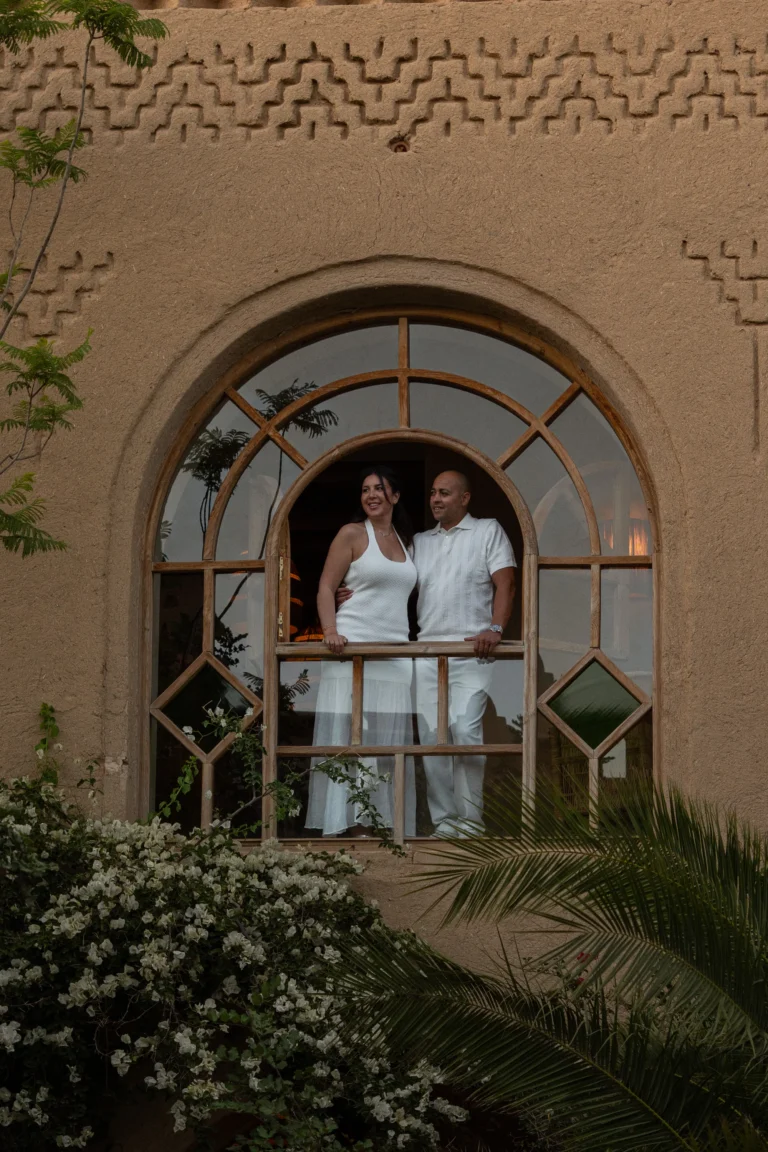
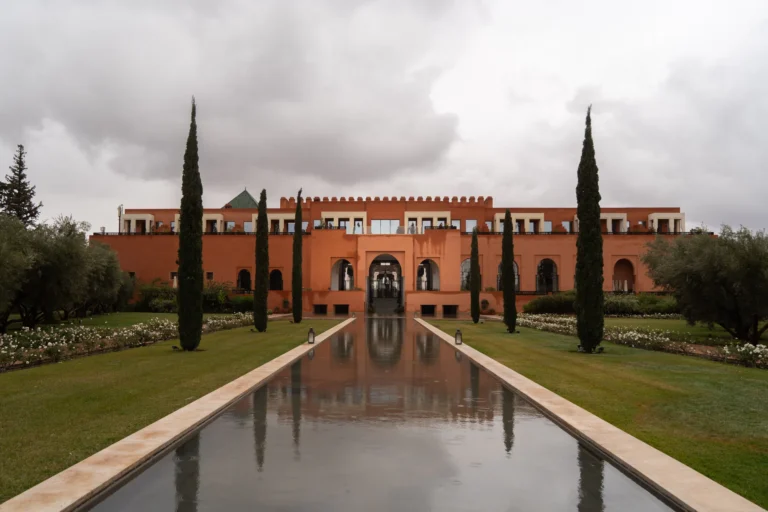
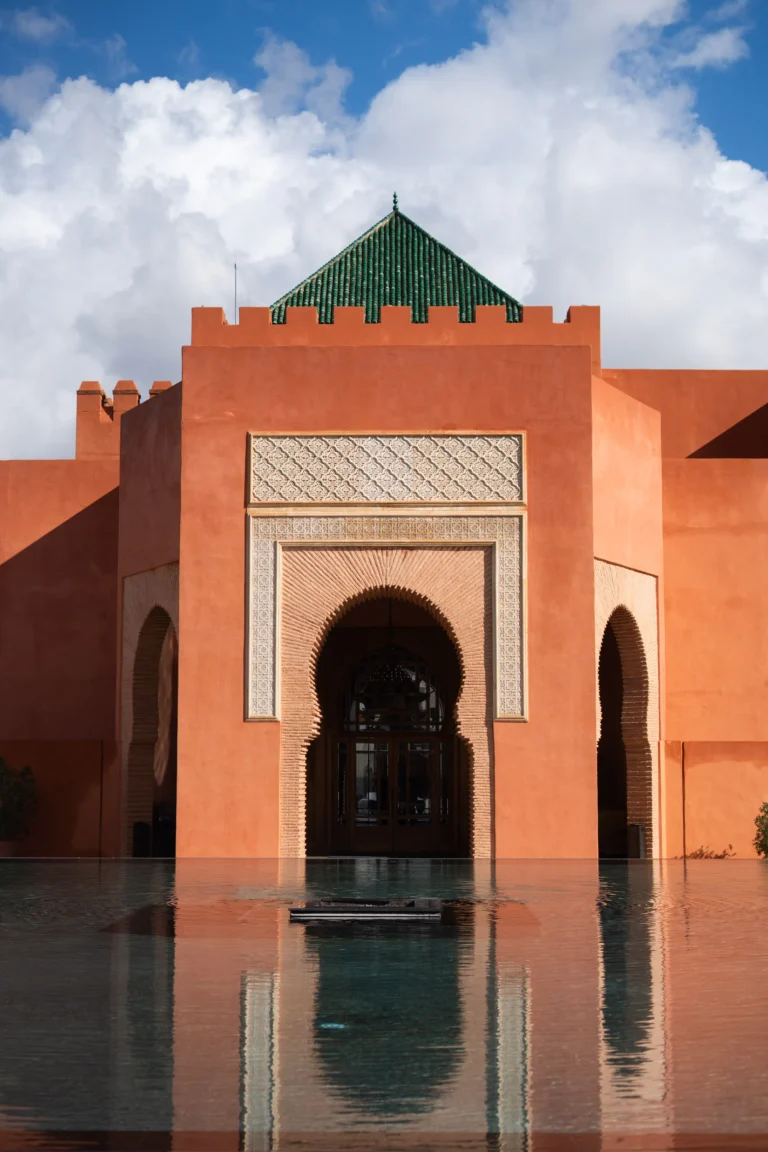
Selected frames / Medina · Souks · Rooftops
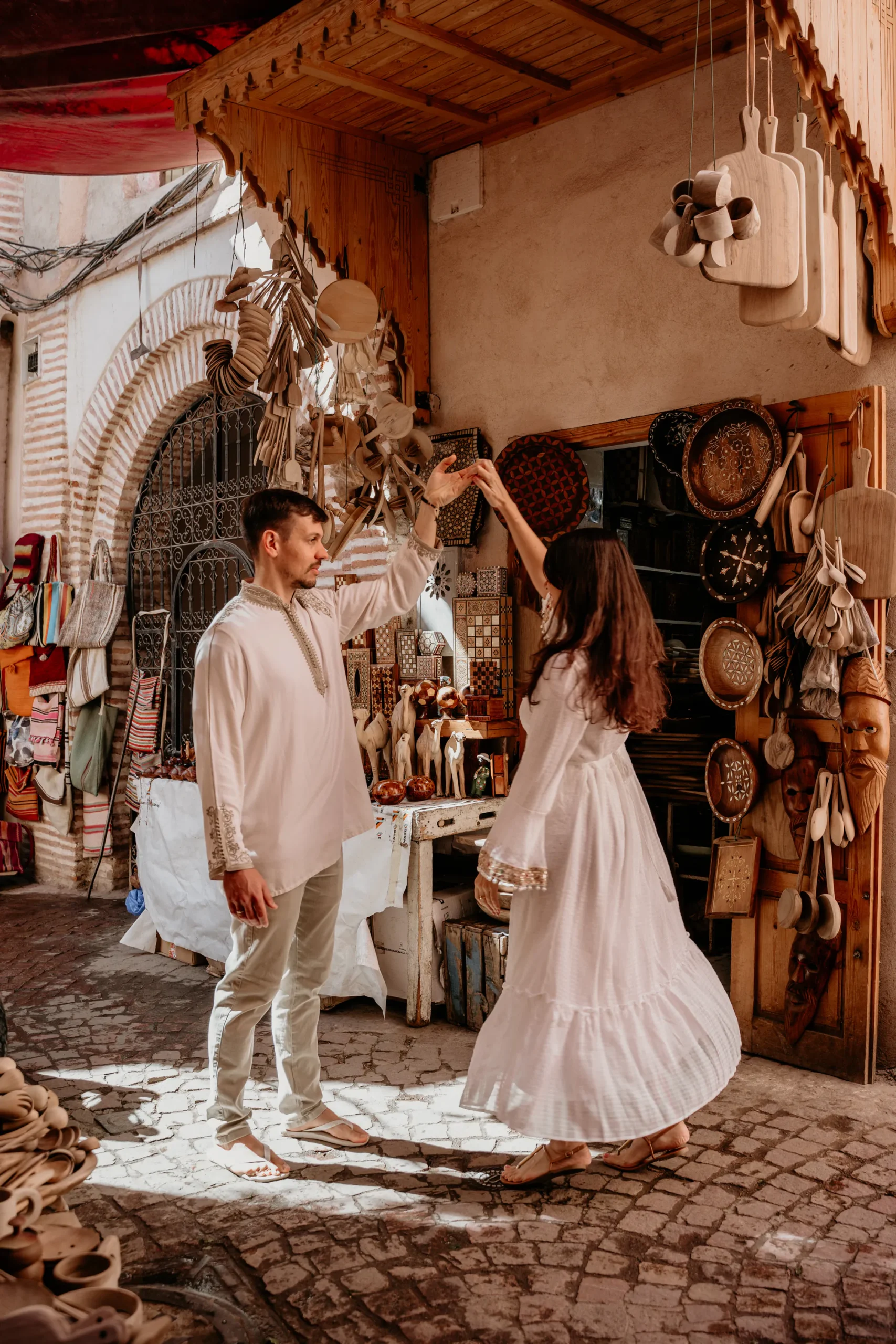
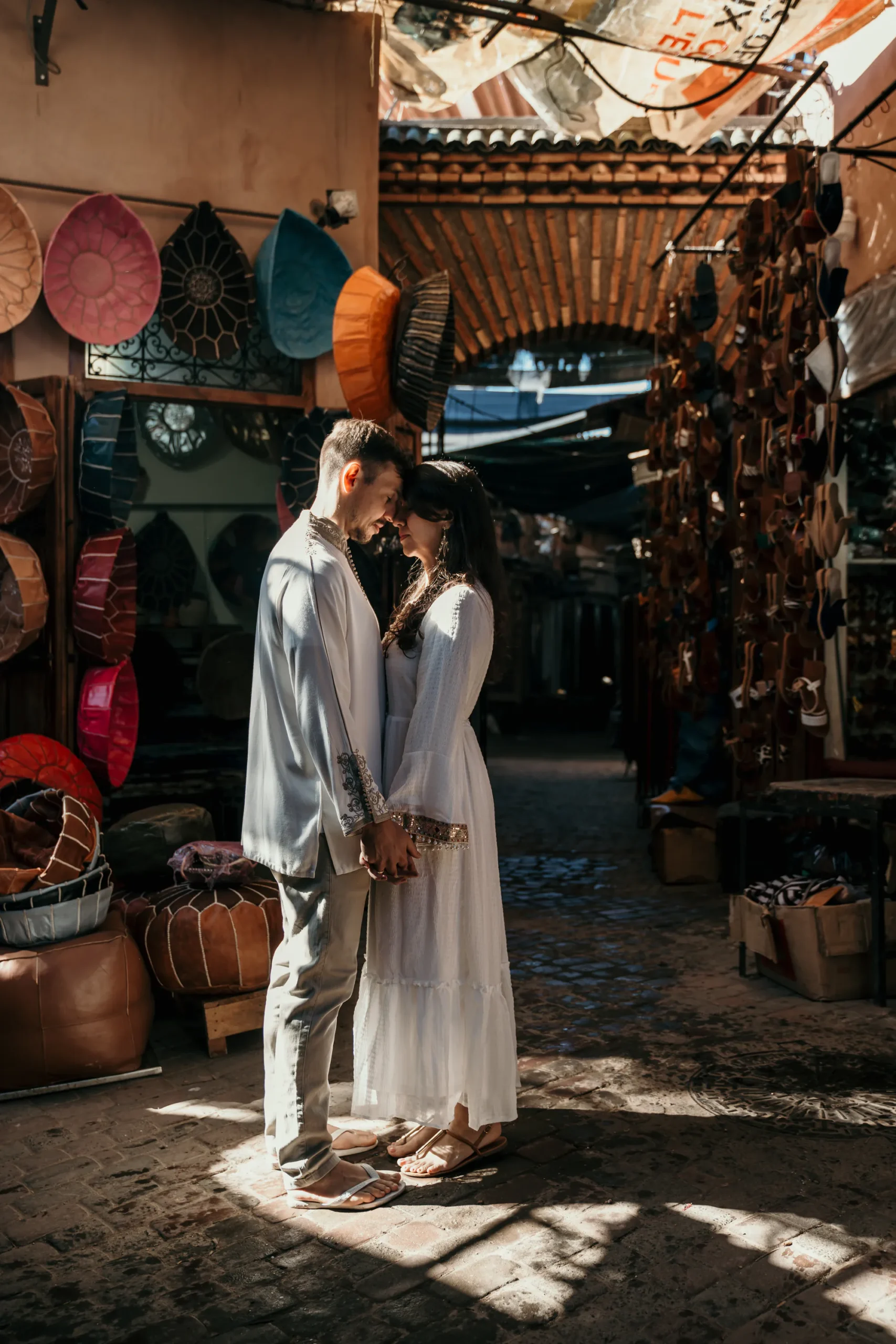
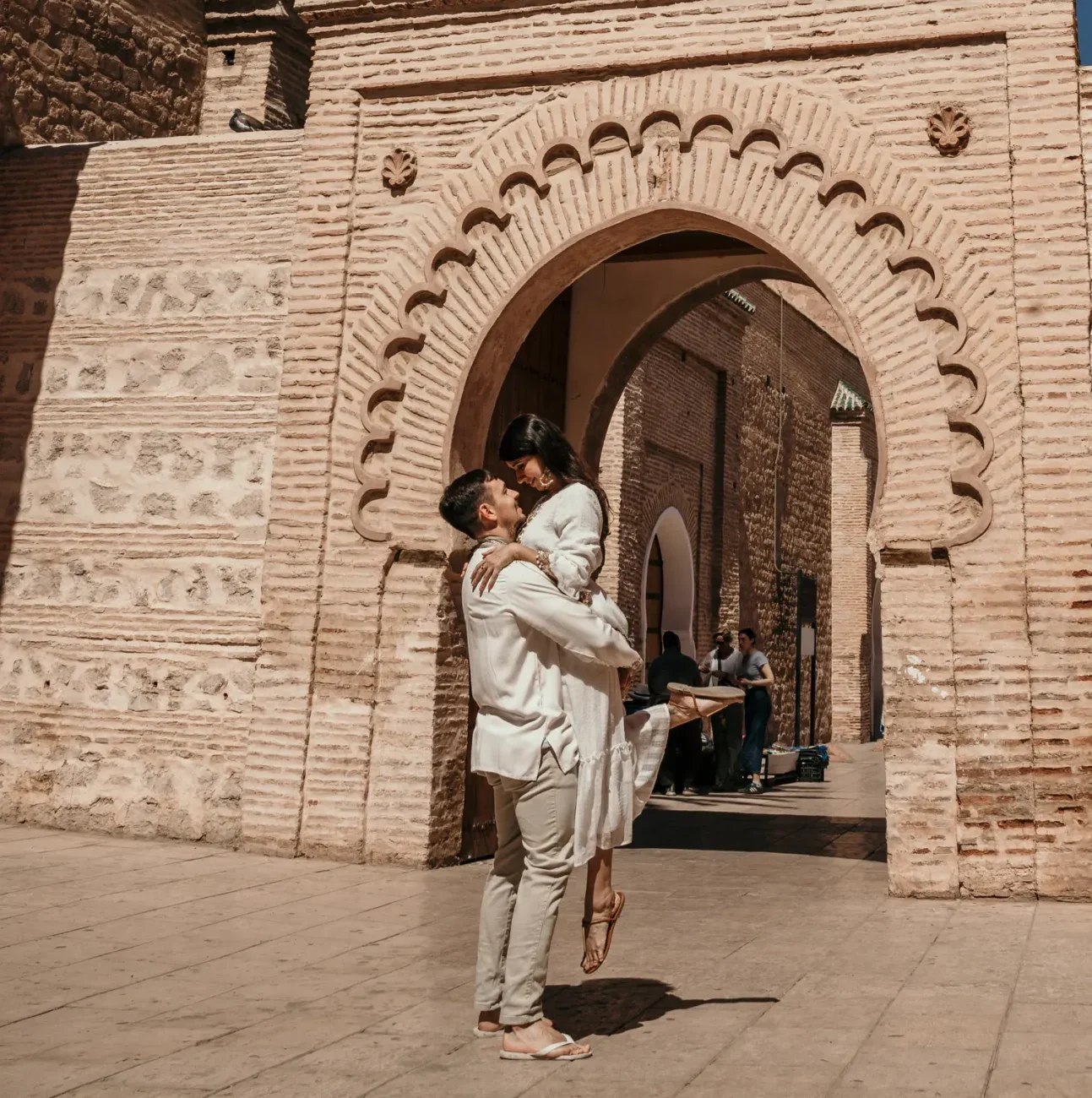
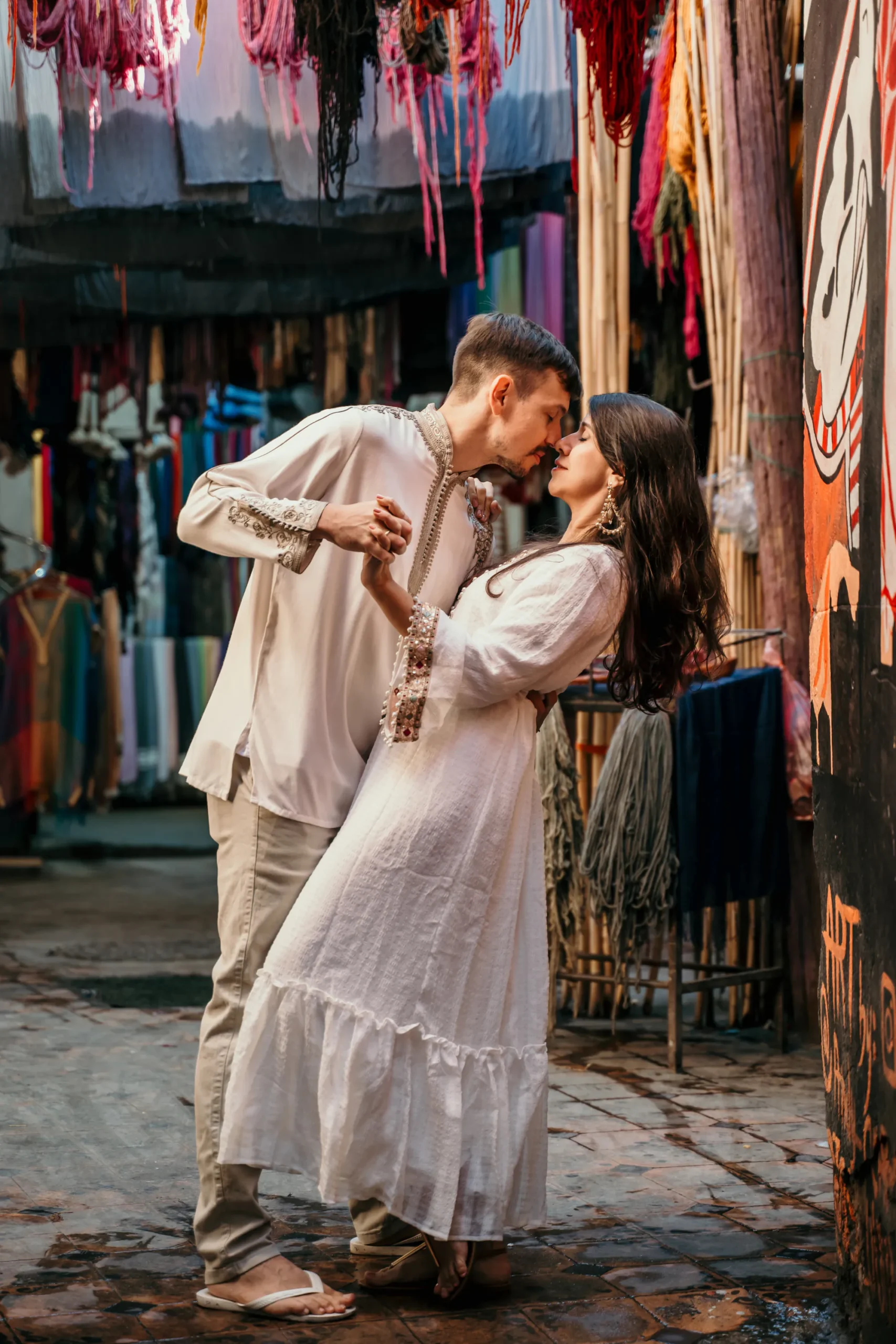
The one rule
Why the hour matters more than the place
Marrakech does not really open until around ten in the morning. Before that, the medina belongs to bakers, cats, and people walking to the mosque. Shops are shuttered, the alleys are empty, and the first light comes in low and horizontal down streets that are in deep shadow for the rest of the day.
That window, roughly from first light to nine, is the entire reason to book a medina session. Everything you have seen and liked was almost certainly taken inside it.
The same alley, at the same spot, is a different photograph at seven and at eleven. One of them has your face in it. The other has forty strangers.
Late afternoon is the second option, and it works differently. The souks are covered and dim, so they hold their character all day, and around five the light striking the upper walls turns the whole medina a deep apricot. Rooftops come alive at dusk. What does not work, at any time of year, is midday, when the sun is directly overhead and the walls stop giving you anything.
Locations
Where to shoot in the Marrakech medina
| Location | Best time | What to expect |
|---|---|---|
| Ben Youssef Madrasa | First hour of opening | The most photographed interior in the city, and deservedly. Carved cedar, zellige, still water. Fills quickly. |
| Bahia Palace | Opening, or late afternoon | Painted ceilings and long arcades. The courtyards handle harsh light better than most sites. |
| El Badi Palace | Late afternoon | Ruined, open, enormous. Storks on the walls. Very different in character from the polished sites. |
| Le Jardin Secret | Morning | Calm, green, a rooftop tower with a view over the medina roofs. |
| Dar el Bacha | Morning | Beautiful courtyard and one of the city’s best cafés attached to it. |
| The souks | Any time, dim throughout | Shafts of light through slatted roofs. Narrow, busy, and the most demanding place to work. |
| Riad courtyards and rooftops | Morning and dusk | Private, quiet, no permissions to negotiate. Ask your own riad first. |
| Jemaa el-Fnaa | Dusk | Smoke, lamps, movement. Best photographed from a terrace above rather than inside the crowd. |
Monument entrance fees are separate and are almost never included in a photographer’s price, for you or for them. Budget a little cash and check opening hours the day before, as they shift with the season and with religious holidays.
Nearby
Worth leaving the medina for
Three places sit outside the old walls and are often worth adding to a session.
- Jardin Majorelle and the Yves Saint Laurent museum. That cobalt blue is unlike anything else in the city. Go at opening or not at all, and check the current photography policy, which has tightened over the years.
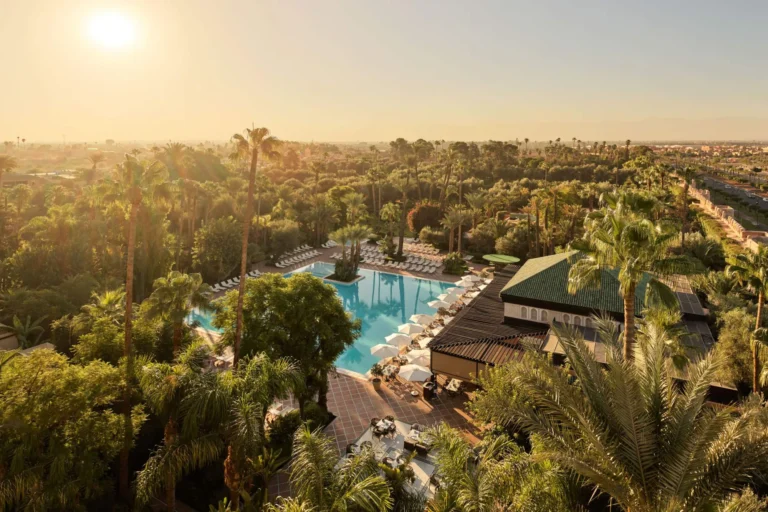
- The Palmeraie. Palm groves and low light, ten minutes by car. Good when you want space and quiet after the density of the medina.
- The Agafay. Forty minutes out, an entirely different landscape, and the natural second half of a full-day session.
The rules
Permits, tripods and what is not allowed
Personal photography
Shooting handheld for your own use needs no permit. Walk the medina with a camera or a phone and photograph the architecture freely.
Commercial and professional work
Once a shoot becomes commercial, or once you turn up with lights, stands and a crew, you are in different territory and authorities can ask what you are doing. Serious production work in Morocco requires proper authorisation. If you are shooting a brand campaign or anything with a crew, arrange it in advance through a local producer rather than improvising.
Tripods
Most monuments discourage or refuse them, and in the souks they are simply impractical. Fast glass and a steady hand will serve you better. If you need one for a specific frame, ask at the entrance rather than setting up and hoping.
Absolute limits
- No drones. Private drone use is not permitted and the enforcement point is the airport scanner. We wrote about this at length: flying a drone in Morocco.
- No police, military or government buildings. You can be asked to delete images on the spot. Your own government’s travel advice for Morocco covers this and other local rules.
- Mosque interiors are not open to non-Muslims. Photograph the Koutoubia from outside, which is where the good frame is anyway.
Etiquette
Photographing people, properly
This is where visitors most often have a bad experience, and it is entirely avoidable.
General street scenes and architecture are fine. Pointing a lens at an individual is not, unless you have asked. Many people will say no, and that is their right. Ask with a gesture and a smile, accept the answer, move on.
Performers, water sellers and anyone in costume on Jemaa el-Fnaa work on a different basis: their image is their livelihood, and they expect payment. A small note is normal and fair. What causes trouble is photographing them from a distance and walking away, which turns into a pursuit across the square.
Artisans at work in the souks are often happy to be photographed if you spend a moment with them first. Buy something small, watch what they are doing, then ask. The photograph you get afterwards is better than the one you would have stolen.
One practical note: a large camera with a long lens changes how people react to you before you have taken a single frame. A smaller body, or a phone, gets you further in the medina than better equipment does.
Wardrobe
What to wear for a medina photoshoot
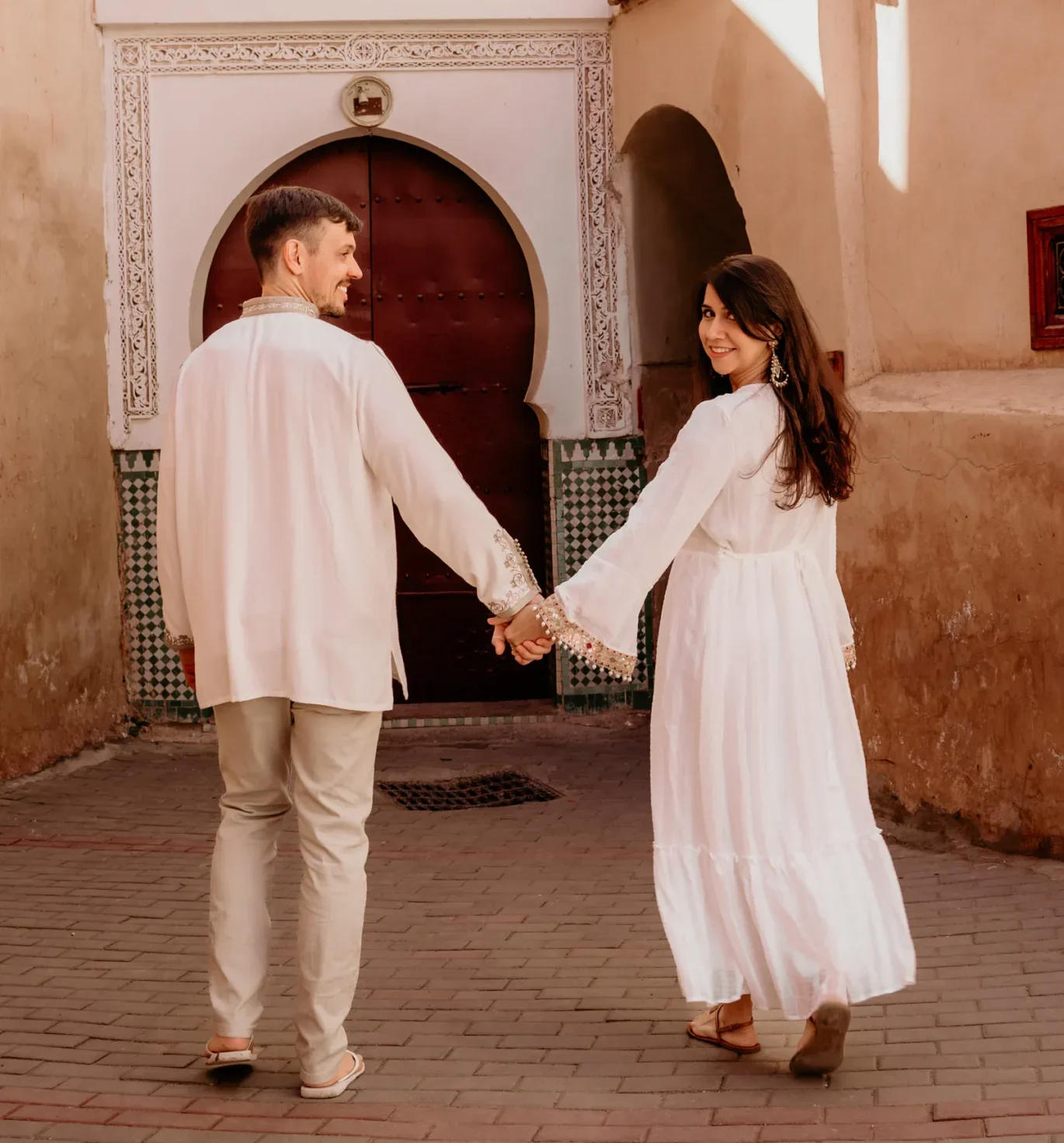
The medina walls are ochre, pink and terracotta. That palette decides most of this for you.
- What sings: cream, white, deep green, navy, black, rust. Solid colours over busy prints, because the background is already busy.
- What fights the walls: bright orange and salmon, which disappear into the plaster.
- Movement helps. Flowing fabric in a narrow alley with a breeze does half the work of the photograph.
- Watch the hem. Medina ground is dusty and uneven. A long trailing dress will pick up the city. Some couples embrace it, others regret it.
- Shoes you can walk in. A proper session covers real distance on uneven stone.
- Dress with some modesty. Covered shoulders and knees are not a legal requirement, but the medina is a residential neighbourhood as much as a tourist site, and you will be treated better.
Renting a kaftan is a popular option and can be lovely. Just make it one look among several rather than the whole session.
The route
A two-hour route that works
This is roughly what we would do for a couple with one morning in the medina.
- First lightStart on your riad’s rooftop. The city is quiet, the Atlas is often visible, and nobody is awake yet.
- Plus 20 minDown into the derbs nearest the riad. Empty alleys, doorways, long light. This is where the best frames usually come from.
- Plus 50 minWalk toward the souks as the first shutters open. Shafts of light, artisans starting the day, real activity rather than crowds.
- Plus 80 minOne monument, at opening time. Ben Youssef or Bahia. Twenty focused minutes before the tour groups arrive.
- Plus 110 minMint tea somewhere with a terrace. The unposed frames at the end are often the ones people keep.
Two hours is enough for a strong gallery. Three lets you add a second monument or change outfits. Beyond that, you are usually better off adding a separate location on another day than extending in the heat.
Learn from others
Five mistakes we see constantly
- Booking for midday. It is the one hour of the day the medina gives you nothing. Sunrise or late afternoon, always.
- Choosing locations from Instagram without checking access. Some of the most reproduced spots are inside private riads or venues that require permission.
- Bringing too much gear. Every extra bag slows you down in the alleys and changes how people respond to you.
- Photographing performers and walking off. Pay, or do not photograph. Both are fine. Doing neither is what causes the scenes visitors write about online.
- Forgetting the dust. It gets into everything. Bring a cloth, and if you are changing lenses, do it indoors.
Common questions
Marrakech medina photoshoot: FAQ
Do I need a permit for a photoshoot in the Marrakech medina?
Not for personal handheld photography. Commercial productions, or shoots involving lighting, stands and a crew, require proper authorisation and should be arranged through a local producer in advance.
What is the best time of day to shoot in the medina?
First light to around nine in the morning. The alleys are empty, the light is low and directional, and the city has not opened yet. Late afternoon into dusk is the second-best window.
Can I use a tripod inside the monuments?
Usually not. Most sites discourage or refuse tripods, and they are impractical in crowded souks. Ask at the entrance if you need one for a specific frame.
Are monument entrance fees included in a photoshoot?
Almost never, and they usually apply to the photographer as well as to you. Carry cash and check current opening hours, which change with the season.
Is it rude to photograph people in the souks?
Only if you do not ask. General street scenes are fine. For individuals, ask first and accept a refusal. Performers and costumed sellers expect a small payment, which is fair and normal.
Can I fly a drone for photographs in Marrakech?
No. Private drone use is not permitted and equipment is regularly confiscated at the airport on arrival. Aerial work has to go through a licensed local operator.
How long should a medina session be?
Two hours covers a rooftop, the alleys, the souks and one monument comfortably. Three allows a second monument or an outfit change. Longer sessions are usually better split across a second location.
Sessions
Shooting in Marrakech?
Tell us your dates and where you are staying. We live here, we know which alleys are empty at seven and which monuments are worth the entrance fee, and we will build the route around the light rather than around a list.
Check our availabilityWritten by Rachid, H264Films. Photography, film and aerial work across Morocco. See our recent work, or read our guide to Marrakech wedding venues.